Dog Chews for Aggressive Chewers: Frequency Guide
Researched by Sage
This article contains affiliate links. We may earn a commission at no extra cost to you. See our disclosure.
How Long and How Often: The Answer Most Chew Guides Skip
Most articles on vet recommended dog chews for aggressive chewers focus entirely on which products to buy. Almost none of them answer the question that actually determines whether a chew is safe for your dog: how long should a session run, and how many times per week can you give it? Those two factors shape every GI issue, every cracked molar, and every emergency vet visit linked to chews.
The general veterinary guidance, per Mountain Valley Antlers and Real Dog Box, is 20 to 30 minutes of focused chewing per day for strong chewers, distributed across one or two supervised sessions rather than a single marathon. For any chew your dog hasn't tried before, Real Dog Box recommends starting at 10 to 15 minutes maximum and monitoring for digestive tolerance before increasing duration.
Frequency limits vary by chew type and have real stakes. Bully sticks carry a dense protein load that can cause digestive upset in daily doses – limit them to one to two times per week. Collagen sticks carry less fat (roughly 1 to 3 percent versus 3 to 7 percent for bully sticks according to Bully Sticks Direct) and tolerate the same one to two times weekly schedule more easily. Yak chews carry their own set of concerns detailed below – once per week is the outside limit, not a baseline.
The Two Tests That Tell You Whether a Chew Is Safe Before Your Dog Touches It
Before you put any chew in front of a Lab, Pit Bull, or Rottweiler, run two quick tests. The thumbnail test: press your thumbnail firmly into the surface of the chew. If it does not indent at all, the chew is too dense and risks fracturing your dog's teeth. The kneecap rule, coined by board-certified veterinary dentist Dr. Fraser Hale, is even simpler: tap the chew against your kneecap. If it would hurt, it can fracture a tooth. Both tests are confirmed by the Animal Dental Specialist clinic and supported by the 2019 AAHA Dental Care Guidelines.
What both tests are measuring is chew density and give. The specific tooth at risk is the fourth premolar, called the carnassial tooth – the large shearing molar at the back of the jaw where aggressive chewers generate maximum force. A chew with no give transfers all that force to the tooth itself. The result is a slab fracture: a large piece of the tooth crown shears off, often exposing the pulp and requiring extraction or root canal treatment.
Applied to common products: elk antlers, water buffalo horns, and raw bones all fail the thumbnail test. Nylon chews like Nylabone are specifically flagged by a veterinary dentist in r/dogs as causing slab fractures in aggressive chewers. A frozen Kong Extreme passes. A Himalayan yak chew is borderline – Preventive Vet documents that yak cheese chews fail the thumbnail test when new and fully hardened.
The Antler Problem: What Sellers Say vs. What Veterinary Dentists Document
Antler sellers position elk and deer antlers as the safest long-duration chew available. The veterinary dental community takes the opposite position. Your Pet Dentist and veterinary dentist Dr. Tony Woodward both list antlers among the top causes of slab fractures. Preventive Vet specifically documents that antlers can break and splinter, causing fragments to lodge in the mouth, throat, or intestines.
The Reddit community of owners who have actually used antlers with aggressive chewers is just as pointed. A dedicated r/dogs thread on how to give antlers safely drew top comments including 'This is like writing a post on how to safely feed your dog grapes: you DON'T' and 'They're not safe for dogs period.' A veterinary dental nurse in the same thread confirmed that wolf skulls routinely show fractured and missing teeth, and that domestic dogs have no hunting need that would justify the dental risk.
The split vs. whole antler distinction does not change this calculus in a meaningful way for aggressive chewers. Split antlers expose the softer marrow center, which makes entry easier for moderate chewers. Whole antlers are denser and last longer, per Devil Dog Pet Co.'s own comparison, but the hard outer cortex on both types fails the thumbnail test. For a dog that bites with full force, neither format eliminates the fracture risk – it only changes how quickly the dog gets to the harder exterior.
Yak Chew Long-Term Safety: The GI Concern No One Talks About
Himalayan yak chews are the most frequently recommended edible option in r/dogs for aggressive chewers, and for many dogs they are a reasonable choice. But the long-term use picture is more complicated than the marketing suggests. A notable r/puppy101 thread with 130+ comments documents owners whose dogs developed gastrointestinal illness after approximately one year of regular yak chew use, pointing to cumulative digestive stress from frequent use.
Preventive Vet also flags that yak chews fail the thumbnail test when new and fully hardened, placing them in the same density range as chews associated with dental fracture risk. Two XL bricks reportedly last three days to one week for two power chewers in a Facebook German Shepherd Community group – which means some owners are giving yak chews daily without realizing the risk.
The recommended limit is once per week maximum, with supervised sessions of 15 to 30 minutes. The microwave nub trick (soaking the worn-down end piece in water, then microwaving 45 to 90 seconds until it puffs into a soft cheese crisp) does reduce choking risk from the small final piece and is useful – but it does not change the dental or GI risk profile of the main chew itself. For dogs with any history of digestive sensitivity, yak chews should be introduced slowly and watched closely.
Edible vs. Non-Edible: The Decision That Comes Before Any Product Choice
Before comparing bully sticks to collagen sticks or yak chews to antlers, there is a more fundamental decision: does your dog need an edible chew or a non-edible chew toy? These serve different functions. Non-edible options like the KONG Extreme or Benebone Wishbone provide a lasting outlet for chewing compulsion without being consumed – appropriate for high-frequency daily use. Edible options like bully sticks, collagen sticks, and yak chews are consumed, which means calorie load, digestive impact, and frequency limits all apply.
The ASPCA formally categorizes these differently and warns that matching the wrong category to the wrong dog leads to choking, obstruction, or dental fracture. Dr. Buzby's ToeGrips blog recommends alternating between non-edible and edible chews on different days. In practice, a functional rotation for an aggressive chewer uses a non-edible rubber chew toy on most days, with edible chews reserved for a few specific sessions per week.
Bully sticks vs. collagen sticks is a common sub-question within the edible category. Bully sticks are 80 to 90 percent protein with higher fat (3 to 7 percent), making them ideal for active dogs that burn the calories but a risk for weight-managed dogs. Collagen sticks run 70 to 85 percent collagen protein with lower fat (1 to 3 percent), last roughly 20 percent longer due to denser structure, and naturally contain glucosamine and chondroitin, making them the better option for senior dogs or those with joint issues, per Bully Sticks Direct. Both are fully digestible and single-ingredient, making them safe options for dogs with food sensitivities or allergies, unlike rawhide.
A Weekly Rotation Framework for Aggressive Chewers
Multiple r/dogs rotation threads converge on combining edible and non-edible chews across the week, but no one maps it out with the frequency limits applied. The framework below reflects the sourced guidance on session length, weekly caps by chew type, and digestive rest logic from Preventive Vet and the ASPCA.
- Daily (non-edible outlet): KONG Extreme stuffed and frozen, or Benebone Wishbone for solo chewing. These pass the thumbnail test, do not contribute to calorie or digestive load, and can be used as often as your dog needs an outlet. Supervise the first few sessions with any new rubber toy to check for torn chunks.
- 1 to 2 times per week (moderate protein/fat edible): Bully stick or braided bully stick, 20 to 30 minutes lasts under supervision, with a bully stick holder in use. Rich protein content makes daily use a GI risk for most dogs – space these out.
- 1 to 2 times per week (lower-fat edible): Collagen sticks, beef tendon/paddywack, or beef cheek rolls. Lower fat load than bully sticks allows slightly more frequent use. Tendons are particularly useful for weight-managed dogs. Rotate these on the off-days from bully sticks.
- Once per week maximum (dense edible): Himalayan yak chew, 15 to 30 minutes lasts under supervision. Allow digestive rest days between yak chew sessions. Watch for any GI changes after the first few uses.
- Dental session, 2 to 3 times per week: Virbac C.E.T. Enzymatic chews provide a clinically validated plaque and tartar benefit via their dual-enzyme system. These are not long-duration chews – they are designed for dental maintenance and should not be used as the primary chewing outlet.
- Avoid in an aggressive chewer rotation: Antlers (fracture risk, no give), nylon bones including Nylabone Power Chew (slab fracture risk documented in r/dogs by veterinary dental professionals), cooked or stuffed bones (splinter risk), and any edible chew given daily without a rest day.
Size-Appropriate Matching and Puppy Considerations
Chews that work for a 75-pound adult Lab can be genuinely dangerous for a puppy, and not just because of size. Puppy teeth and adult teeth have very different tolerance for chew density. Veterinarians recommend softer, age-appropriate options for developing teeth – collagen sticks are gentler on puppy teeth than bully sticks, per the AKC's guidance on puppy chewing. Dense chews like hardened yak chews and antlers are not appropriate for puppies under approximately 5 to 6 months. Senior dogs with worn teeth face the same risk at the opposite end: the density that a young adult dog manages under supervision becomes a fracture risk as enamel wears down with age.
For dogs with food sensitivities or confirmed allergies, both bully sticks (single-ingredient beef pizzle) and collagen sticks (single-ingredient beef collagen) are hypoallergenic and grain-free options, per Bully Sticks Direct. Himalayan yak chews are lactose-free despite being dairy-derived, making them usable for many lactose-intolerant dogs – but the cumulative GI concerns from long-term frequent use (documented in the r/puppy101 thread above) remain relevant regardless of allergy status.
Recommended Products
The products below cover the main categories in a functional aggressive chewer rotation: non-edible rubber toys that pass the thumbnail test, edible chews with verified digestibility and real review data, and dental chews with a clinical validation basis. Products flagged with significant safety caveats are included with those caveats stated.
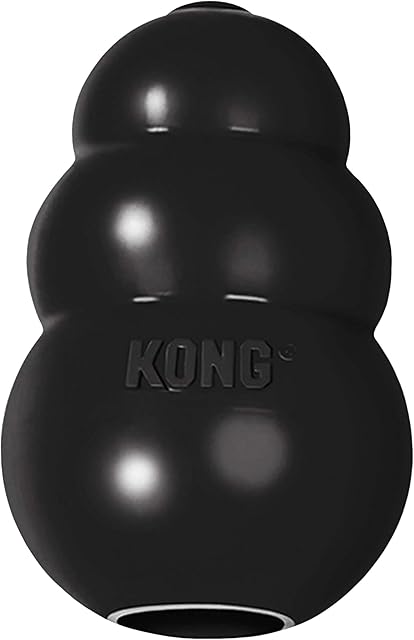
KONG Extreme Dog Toy (Black)
Amazon
- Edible:
- No — chew toy
- Material:
- Natural black rubber (KONG Extreme grade — hardest formulation)
- Dishwasher Safe:
- Yes
- Fill Compatible:
- Yes — stuffable with treats, kibble, peanut butter
- Sizes Available:
- Small, Medium, Large, X-Large, XX-Large
What we like
- 4.6-star rating with 32,400+ Amazon reviews – one of the top-rated dog toys on Amazon overall
- Black Extreme rubber is KONG's hardest formulation, specifically engineered for power chewers
- Can be stuffed and frozen, extending chew sessions to 30–45 minutes and providing mental enrichment
- Passes the 'thumbnail test' cited by veterinary dentists: rubber has enough give that it won't fracture teeth the way nylon or antler can
- Reddit users recommend it: 'Extreme Kongs stuffed with their fresh food and frozen. Keeps them entertained, slows down their eating, and holds up to chewing and playing'
Worth knowing
- Not a consumable – some dogs lose interest once the stuffed treat inside is gone
- Requires stuffing and often freezing for maximum engagement – more prep work than natural chews
- Very determined power chewers can eventually tear off rubber chunks, making replacement necessary
- One r/dogs user noted their dog 'only interested until the treats are gone'

Himalayan Dog Chew Yak Cheese (Large)
Amazon
- Digestible:
- Yes — 100% edible
- Grain Free:
- Yes
- Ingredients:
- Yak milk, cow milk, lime juice, salt
- Lactose Free:
- Yes
- Microwave Hack:
- Nub can be microwaved 45–90 sec to create puffed cheese treat
- Sizes Available:
- Small, Medium, Large, X-Large
What we like
- Long-lasting – two XL bricks reportedly last 3 days to 1 week for two power chewers (per Facebook German Shepherd Community group)
- 100% digestible with no artificial additives, preservatives, or rawhide
- Lactose-free and grain-free, making it suitable for dogs with food sensitivities
- Worn-down nub can be microwaved to create a puffed cheese treat, eliminating waste
- Frequently cited in Reddit's r/dogs as the top recommendation for aggressive chewers who need a safe, natural option
Worth knowing
- Detailed Reddit thread (130+ comments) reports GI illness developing in some dogs after ~1 year of regular use, suggesting digestive sensitivity concerns with long-term heavy use
- Aggressive chewers can reduce a large chew in under 20–30 minutes depending on size selection
- Higher cost per chew compared to bully sticks for equivalent chew time
- Leaves white residue on floors and surfaces as dog works the chew
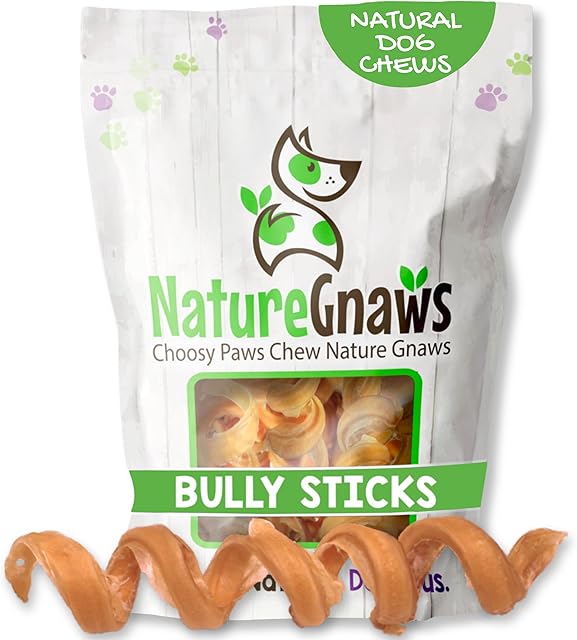
Nature Gnaws Braided Bully Sticks (11–12 inch)
Amazon
- Length:
- 11–12 inches
- Digestible:
- Yes — fully digestible
- Ingredient:
- 100% grass-fed beef pizzle
- Construction:
- Triple-braided (3 bully sticks twisted together)
- No Additives:
- No artificial preservatives, colors, or flavors
- Rawhide Free:
- Yes
What we like
- Braided construction combines 3 bully sticks, making them significantly more durable than single-strand sticks for aggressive chewers
- 4.3-star average across 13,700+ Amazon reviews and Amazon Choice badge
- 100% grass-fed beef with no artificial additives – single-ingredient treat
- Fully digestible unlike nylon alternatives – safe if pieces are ingested
- NatureGnaws describes braided sticks as their top recommendation for power chewers who need 'an even tougher challenge'
Worth knowing
- Even braided bully sticks can be consumed quickly (30 minutes to an hour) by extreme power chewers
- Require a bully stick holder for the last 2–3 inches to prevent choking hazard
- Rich protein content means they should be limited to one per day for most dogs to avoid digestive upset
- Higher cost per chew than single-strand bully sticks

Pawstruck Natural Beef Collagen Sticks (12 inch)
Amazon
- Length:
- 12 inches
- Pack Size:
- 5 pack
- Digestible:
- Yes — fully digestible
- Rawhide Free:
- Yes
- Main Ingredient:
- Beef collagen
- Added Joint Support:
- Chondroitin and glucosamine
What we like
- 4.2-star rating with 9,200+ Amazon reviews – one of the best-reviewed collagen sticks on Amazon
- Amazon Choice badge for the beef collagen sticks category
- Added chondroitin and glucosamine support joint health – benefit beyond just chewing entertainment
- Rawhide-free and fully digestible – safer alternative to traditional rawhide chews
- 12-inch length provides more chew time than standard 6-inch sticks, especially for large breeds
- Natural Farm describes collagen sticks as 'a top choice for heavy chewers due to durability and safety compared to bone products'
Worth knowing
- Softer than bully sticks – highly determined chewers may finish a 12-inch stick faster than expected
- Collagen chews can get slippery and slimy as the dog works them, which some owners find unpleasant
- Requires supervision like all edible chews – must be replaced when worn to a small nub
- Higher cost per stick than standard bully sticks

Natural Farm Collagen Sticks Odor-Free (12 inch, 12-pack)
Amazon
- Odor:
- Odor-free processing
- Length:
- 12 inches
- Pack Size:
- 12 pack
- Digestible:
- Yes
- Target Size:
- Medium and large dogs
- Rawhide Free:
- Yes
- Collagen Content:
- 95% collagen
What we like
- 4.4-star rating with 5,500+ Amazon reviews
- 95% collagen content – higher concentration than many competing collagen sticks
- Odor-free formulation – unlike bully sticks, no noticeable smell during chewing
- Bulk 12-pack provides better value per stick than smaller pack sizes
- Natural Farm positions collagen braids as combining triple-stick durability with joint-supporting collagen
Worth knowing
- Higher upfront cost at $37.99 for 12-pack (approximately $3.17 per stick)
- 12-inch length may be too large for small dogs to handle comfortably
- As with all collagen chews, these are softer than yak chews or antlers – may not satisfy extreme power chewers for long periods

Benebone Wishbone Durable Dog Chew
Amazon
- Edible:
- No (flavored chew toy)
- Made In:
- USA
- Material:
- Nylon with real food ingredients
- Sizes Available:
- Small, Medium, Large, Giant
- Flavors Available:
- Bacon, Chicken, Peanut Butter
What we like
- 100,000+ Amazon reviews with 4.5-star average – one of the most reviewed dog chews on the platform
- Wishbone shape designed for easy pawing and solo chewing without owner assistance
- Flavored with real ingredients (bacon, chicken, peanut butter) so dogs stay interested longer
- Made in USA with food-grade nylon material
- Reddit users in r/dogs specifically name Benebone as a top recommendation for aggressive chewers
Worth knowing
- Nylon is not digestible – fragments ingested in large quantities can cause GI issues
- Veterinary dentists warn that overly hard chews like nylon can cause slab fractures on back molars in aggressive chewers
- Not suitable for puppies under teething stage or senior dogs with worn teeth
- Needs to be replaced when worn down to a size that can be swallowed

Nature Gnaws Beef Paddywack Tendons (5–6 inch, 10-count)
Amazon
- Length:
- 5–6 inches
- Pack Size:
- 10 count
- Digestible:
- Yes
- Ingredient:
- 100% beef paddywack (ligament/tendon)
- Fat Content:
- Low — lower calorie than bully sticks
- Rawhide Free:
- Yes
What we like
- High in protein and collagen – supports joint health and coat quality while chewing
- Lower calorie than bully sticks – good option for dogs on weight management
- Rawhide-free and fully digestible
- NatureGnaws describes paddywack as 'the protein bar of dog chews' – tough enough for serious chew sessions
- BullyBunches ranked beef tendons #2 on their safe chews list, noting 'a high quality beef tendon chew lasts about an hour'
Worth knowing
- 3.9-star rating is lower than competing products – some users may report inconsistent sizing or quality
- Softer texture than yak chews – may not satisfy the hardest chewers for extended sessions
- Can have a noticeable odor compared to collagen sticks
- 10-count at $19.99 makes cost per chew relatively high if a dog consumes them quickly

Amazing Dog Treats Beef Cheek Rolls (Mega Thick)
Amazon
- Size:
- 5–6 inches, mega thick
- Pack Size:
- 4 pieces
- Digestible:
- Yes — fully digestible
- Ingredient:
- 100% beef cheek (no rawhide)
- No Splinters:
- Yes — listed as splinter-free
- Rawhide Free:
- Yes
What we like
- 4.2-star rating with 1,600+ reviews
- Rawhide-free and fully digestible – beef cheek rolls are a common veterinary recommendation over traditional rawhide
- Mega-thick construction makes them significantly more durable than standard beef cheek rolls
- Part of the popular rotation strategy mentioned in r/dogs: users combine beef cheek rolls with yak chews, bully sticks, and tendon chews for variety
- No artificial additives or preservatives – single-protein treat
Worth knowing
- Power chewers may still consume these faster than yak chews – cheek rolls are softer and more pliable
- Can be high in fat – not ideal for dogs on calorie-restricted diets
- Some beef cheek rolls can be quite smelly as dogs work through them
- Supervision required – as the roll gets smaller, choking risk increases
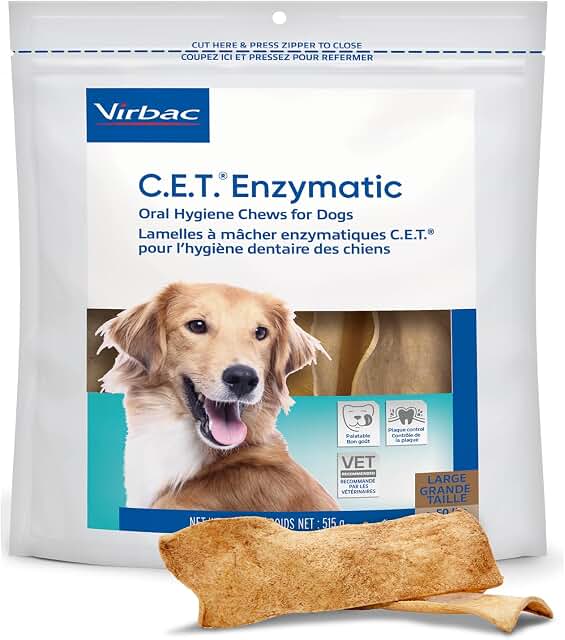
Virbac C.E.T. Enzymatic Oral Hygiene Chews (Large Dogs)
Amazon
- Size:
- Large dogs
- Flavor:
- Chicken
- Target:
- Dental plaque and tartar reduction
- Pack Size:
- 30 count
- Active System:
- Dual-enzyme (glucose oxidase + lactoperoxidase)
- Base Material:
- Beefhide
What we like
- 4.3-star rating with 14,200+ Amazon reviews – strong reputation in the dental chew category
- Dual-enzyme system is clinically validated to reduce plaque and tartar – vet-recommended dental chew brand
- 30-count pack provides good value for daily dental maintenance
- NatureGnaws and veterinary sources note dental benefits of regular chewing – this product directly targets that benefit
Worth knowing
- Beefhide base – while the enzymatic processing makes it safer than traditional rawhide, some owners still prefer rawhide-free alternatives
- Not designed as a long-duration chew for aggressive chewers – purpose is dental health, not hours of entertainment
- Power chewers may consume the chew too quickly for meaningful dental benefit
- Higher cost per chew than bully sticks or collagen sticks
Also Worth Considering

QT Dog Water Buffalo Horn (Large)
Amazon
- Size:
- Large
- Edible:
- No — mineral surface only
- Source:
- Water buffalo (ethically sourced)
- Fat Content:
- Low fat
- Ingredients:
- Single ingredient — 100% all-natural buffalo horn
- No Additives:
- No chemicals, hormones, or artificial additives
The QT Dog Water Buffalo Horn has slightly more give than elk antler and a low fat profile suitable for weight-managed dogs, but it still may not pass the thumbnail test for extreme power chewers – monitor closely and apply the kneecap rule before use.

Devil Dog Pet Co. Elk Antler (Extra Large, 7+ inch)
Amazon
- Odor:
- None
- Size:
- Extra Large, 7+ inches
- Edible:
- No — mineral dust only
- Source:
- Naturally shed Rocky Mountain elk
- Whole Vs Split:
- Whole (denser, longer-lasting) or split (exposed marrow, easier entry)
- Mineral Content:
- Calcium, phosphorus, zinc
The Devil Dog Pet Co. Elk Antler lasts longer than most edible chews, but the veterinary dental and Reddit community consensus on tooth fracture risk from antler density is documented above – include only if your dog's vet has specifically cleared hard chews after a dental evaluation.

Nylabone Power Chew Flavored Dog Bone
Amazon
- Edible:
- No — chew toy only
- Made For:
- Power chewers (Nylabone's hardest designation)
- Material:
- Nylon (non-edible)
- Sizes Available:
- Small, Medium, Large, X-Large, Giant
- Flavors Available:
- Chicken, Beef, Cheese, Bacon
The Nylabone Power Chew is one of the most purchased dog chew toys on Amazon, but multiple r/dogs threads and a veterinary dentist commenter explicitly flag it for slab fracture risk in aggressive chewers – the nylon does not give, and the community consensus is to avoid it for power chewers specifically.
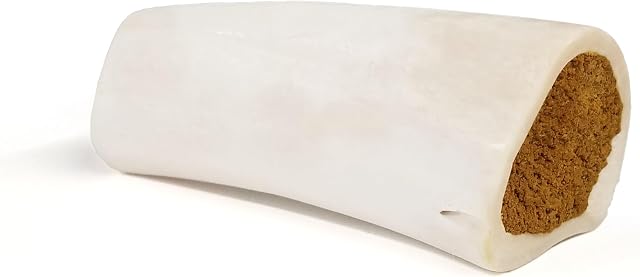
Cadet Stuffed Shin Bone (Peanut Butter, 5–6 inch)
Amazon
- Base:
- Real beef shin bone (5–6 inch)
- Filling:
- Peanut butter flavor
- Pack Size:
- Single bone
- Rawhide Free:
- Yes
- Protein Content:
- High
The Cadet Stuffed Shin Bone is among the most affordable natural hard chews available, but NatureGnaws explicitly lists cooked bones as a chew to avoid for aggressive chewers due to splinter risk – the real bone hardness also carries the same tooth fracture profile as antlers.
Frequently Asked Questions
- How long should a dog chew session last?
- Veterinary guidance from Mountain Valley Antlers and Real Dog Box recommends 20 to 30 minutes of focused chewing per day for strong chewers, spread across one or two supervised sessions. For any new chew type, start at 10 to 15 minutes maximum and monitor for digestive tolerance before increasing duration. Jaw fatigue and excessive tooth wear are real risks from single marathon sessions.
- How often per week can I give bully sticks to an aggressive chewer?
- One to two times per week is the recommended limit for most dogs. Bully sticks are 80 to 90 percent protein with higher fat content (3 to 7 percent per Bully Sticks Direct), and daily use creates a protein and fat load that can cause digestive upset. Rich protein chews need off-days built into the schedule.
- Are Himalayan yak chews safe for daily long-term use?
- No. The recommended limit is once per week maximum, with supervised sessions of 15 to 30 minutes. A notable r/puppy101 thread with 130+ comments documents dogs developing GI illness after approximately one year of regular daily yak chew use. Preventive Vet also documents that hardened yak chews fail the thumbnail test, placing them in the dental fracture risk range. The microwave nub trick reduces choking risk from the final piece but does not change the long-term risk profile.
- What is the thumbnail test and kneecap rule for dog chews?
- The thumbnail test: press your thumbnail firmly into the chew. If it does not leave an indent, the chew is too dense and risks fracturing teeth. The kneecap rule, coined by board-certified veterinary dentist Dr. Fraser Hale, says: if tapping the chew against your kneecap would hurt, it is too hard for your dog's teeth. Both tests are confirmed by the Animal Dental Specialist clinic and supported by the 2019 AAHA Dental Care Guidelines. Antlers, nylon bones, and raw bones typically fail both tests.
- Why do vets warn that Nylabones break teeth if they are designed for power chewers?
- The 'power chew' designation on Nylabone products refers to chew strength rating for the product, not a safety clearance for aggressive chewers' teeth. A chew engineered to resist being destroyed is also engineered to resist absorbing impact, which means that impact transfers to the tooth.
- Are antlers safe for dogs?
- The veterinary dental community says no for aggressive chewers specifically. Your Pet Dentist and Dr. Tony Woodward both list antlers among the leading causes of slab fractures. A r/dogs thread on antler safety drew top comments from veterinary dental professionals stating antlers are not appropriate for dogs at all, noting that the density that makes them durable is exactly what makes them fracture teeth. The AKC takes a more moderate position, but the risk is highest precisely for the heavy biters that antler sellers market to.
- What is the difference between a split antler and a whole antler?
- Split antlers expose the softer marrow center, making it easier for dogs to access what is inside. Whole antlers have the marrow enclosed in the denser outer cortex and last longer. Per Devil Dog Pet Co.'s own comparison, whole elk antlers last 4 to 6 weeks versus 2 to 3 weeks for yak chews. However, both split and whole antlers fail the thumbnail test for aggressive chewers, and the tooth fracture risk applies to both formats.
- Do I need a bully stick holder, and why?
- Yes. When a bully stick reaches 2 to 3 inches, most dogs can swallow the remaining piece whole, creating a choking or intestinal obstruction risk. The Whole Dog Journal's testing found that a holder saves the 3 to 5 inch end pieces that would otherwise need to be thrown away or risked. Preventive Vet recommends removing and discarding bully sticks at 2 to 3 inches – a holder makes that possible instead of forcing you to take away a larger, still-usable stick.
- What is the difference between bully sticks and collagen sticks?
- Bully sticks are beef pizzle (muscle) with 80 to 90 percent protein and 3 to 7 percent fat, last approximately 30 to 60 minutes, and suit active dogs that burn the caloric load. Collagen sticks are inner cow skin, 70 to 85 percent collagen protein with 1 to 3 percent fat, last roughly 20 percent longer (35 to 75 minutes) due to denser structure, and naturally contain glucosamine and chondroitin for joint support, per Bully Sticks Direct. Both are fully digestible, single-ingredient, and rawhide-free. Collagen is the better choice for senior dogs, weight-managed dogs, and dogs with joint issues.
- Should I rotate my dog's chews, and if so, how?
- Yes. Multiple r/dogs rotation threads and the ASPCA both support rotating across chew types to distribute nutritional load, maintain interest, and prevent overexposure to any single protein or digestive burden. The framework: use a non-edible rubber toy daily for the base chewing outlet, rotate bully sticks and collagen sticks or tendons one to two times per week each on separate days, reserve yak chews for once per week maximum, and include dental chews two to three times per week for oral hygiene.
- What chews are best for dogs with food sensitivities or allergies?
- Single-ingredient edible chews are the safest starting point: bully sticks (beef pizzle only), collagen sticks (beef collagen only), and beef tendon/paddywack are all single-protein, rawhide-free, and free of artificial additives. Both bully sticks and collagen sticks are described as hypoallergenic options by Bully Sticks Direct. Himalayan yak chews are lactose-free despite the dairy derivation and are grain-free, making them usable for many sensitive dogs, but introduce them slowly given the documented cumulative GI concerns with long-term use.
- Can I give a puppy the same chews as an adult aggressive chewer?
- No. Puppy teeth cannot tolerate the chew density that adult teeth manage under supervision. The AKC recommends age-appropriate softer options for developing teeth, noting that collagen sticks are gentler on puppy teeth than bully sticks. Dense chews including hardened yak chews and any chew that fails the thumbnail test are not appropriate for puppies under approximately 5 to 6 months. Senior dogs with worn enamel face similar limitations on chew density.
- What is the yak chew microwave hack, and is it worth using?
- When a yak chew wears down to a small nub, soaking it in water then microwaving 45 to 90 seconds causes it to puff into a soft cheese crisp, per the Himalayan Dog Chew product listing. This eliminates the choking risk from the small end piece and reduces waste. It is worth using for the final piece specifically. It does not change the dental or GI risk profile of the main chew during the earlier, harder stages of use.
- How do I know when to throw a chew away?
- For edible chews: remove when the piece reaches a size small enough to be swallowed whole. For bully sticks, that is approximately 2 to 3 inches – use a holder to make this practical. For non-edible chew toys like rubber Kongs or Benebones: replace when visible chunks have been torn off or when the remaining piece is small enough to be a swallowing hazard. All bully sticks should be discarded after use, not stored and re-given, due to bacterial contamination risk per Preventive Vet.
Related articles