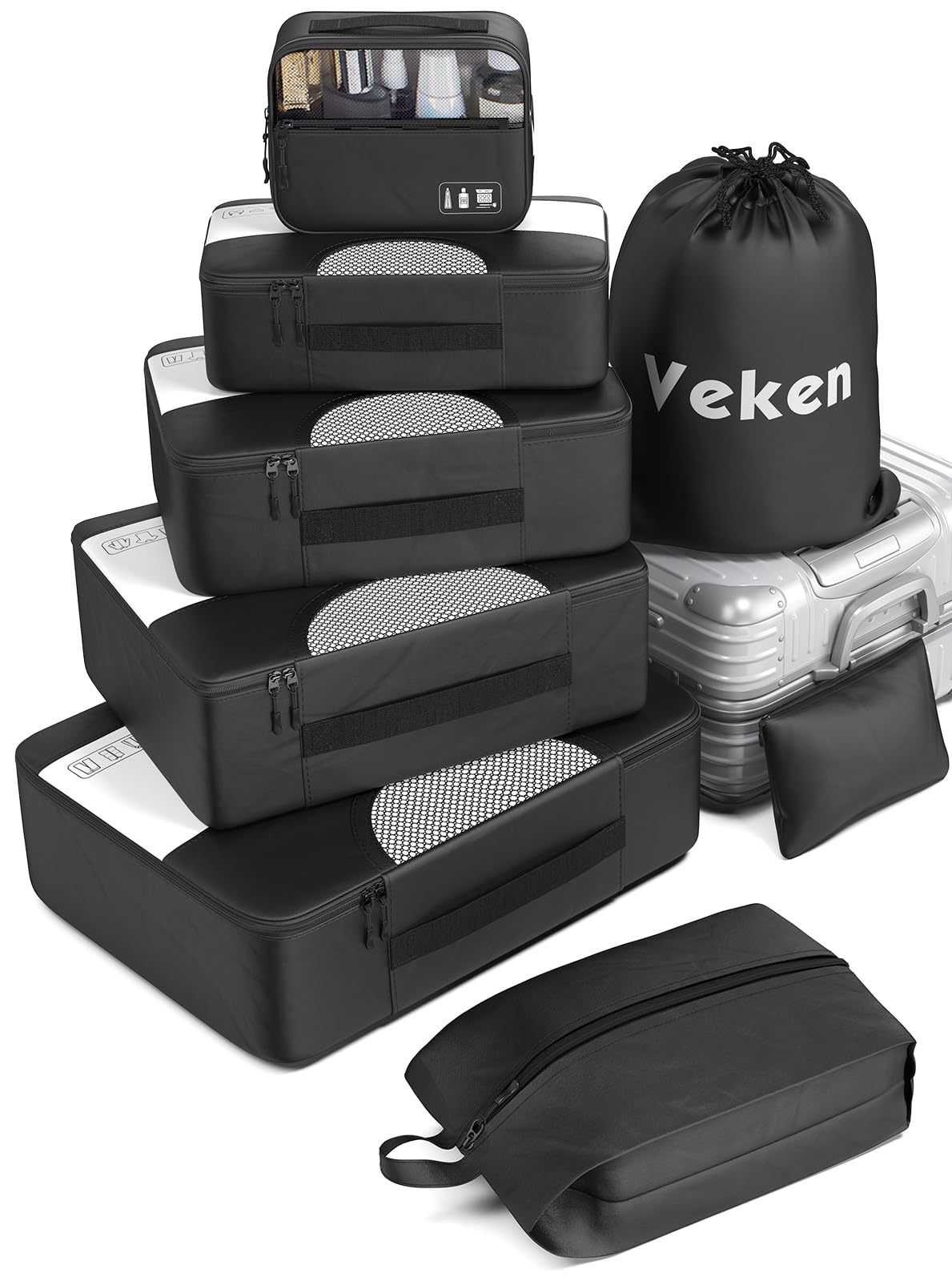
- Type
- Standard packing cubes
- Space Savings
- 10-15%
- Rc by Hand?
- Yes
- Wrinkle Risk
- Low (especially with rolling)
- Best For
- Organization, business travel, formal wear
Compression vs Regular Packing Cubes: Real Space Savings
Researched by Atlas
·8 min read
This article contains affiliate links. We may earn a commission at no extra cost to you. See our disclosure.

The Short Answer: Compression Cubes Save Space, Regular Cubes Just Reorganize It
Standard packing cubes genuinely do not compress your clothes. They reorganize them into neater rectangles, which can make packing feel more controlled, but independent testing by Carry Cubes puts the actual space reduction from standard cubes at 10-15%. For most people, that gap comes from better folding discipline, not from the cubes themselves.
Compression packing cubes are different in a specific, mechanical way. As the Rick Steves travel forum explains, they are regular packing cubes with a second zipper. Pack Hacker describes that extra zipper as one that "minimizes the space inside the cube when you close it." You fill the cube, zip the main closure, then run the compression zipper around the outside to physically squeeze the contents down.
The r/onebag community describes the result as sitting "midway between vacuum and just packing." In measured tests, that second zipper delivers 15-30% space savings on soft clothing, with some fabrics hitting closer to 50% according to CubePacker's testing.
Vacuum bags sit at the top end of space reduction, achieving 50-75% volume reduction per multiple independent sources. NYT Wirecutter testing found clothes compressed to roughly one-third their original size. The tradeoff is significant: you need a pump to re-seal them, making mid-trip access genuinely tedious.
The Numbers: Space Savings Across All Three Types
The table below pulls from the best available independent testing rather than manufacturer claims. No single study tested all three types head-to-head on identical clothing loads, so treat these as ranges rather than precise figures. The AAA test on a standard 21-inch carry-on found compression cubes conserved the most space in the bag, ahead of traditional rolling and standard cubes.
- Type
- Compression packing cubes
- Space Savings
- 15-30% (up to 50% for soft fabrics)
- Rc by Hand?
- Yes
- Wrinkle Risk
- Moderate (depends on fabric)
- Best For
- Casual clothing, 10+ day carry-on trips
- Type
- Vacuum bags
- Space Savings
- 50-75%
- Rc by Hand?
- No (requires pump)
- Wrinkle Risk
- High (especially thin fabrics)
- Best For
- Long-term storage, one-way packing
Travel & Leisure estimated 30% space savings from compression cubes on their tested gear set. The AAA test, documented by Jack Cooper's guide, found compression cubes outperformed rolling and standard cubes for space conservation in a 21-inch carry-on, but noted clothing came out wrinkled. That wrinkle tradeoff is real and worth understanding before you commit to compression for a business trip.
What Compresses Well (and What Doesn't)
The 15-50% compression range exists because not all clothing compresses the same way. Soft, bulky fabrics are where compression cubes deliver their best numbers. Dense or structured fabrics resist compression and create a frustrating experience where the second zipper barely closes and the space savings disappear.
Fabrics that compress reliably, per Carry Cubes testing and Jack Cooper's analysis, include cotton t-shirts, fleece, sweaters, underwear, socks, and activewear. These can reduce volume by 20-50%. What resists compression: structured dress shirts, denim, jackets with padding or hardware, and formal wear. NYT Wirecutter's testing found that dress shirts and dresses most definitely come out of compression looking rumpled and recommends against using compression for clothes you want looking crisp.
- Compresses well: cotton t-shirts, fleece, sweaters, underwear, socks, activewear, merino wool
- Compresses poorly: structured dress shirts, denim, padded jackets, formal wear, towels
- On wrinkles: thick cotton knits, polyester, and merino shed creases reasonably well after compression; thin fabrics like dress shirts do not
This distinction explains why compression cubes produce measurable results for a casual 10-day trip packed with t-shirts and a fleece, but fall short for a 5-day business trip with button-downs and trousers. For the latter, a standard cube with rolling technique will leave your clothes in better condition, even if it saves slightly less raw volume. Pack Hacker recommends the Eagle Creek Pack-It Isolate medium slim specifically for rolling button-up shirts to keep them wrinkle-free.

Why Vacuum Bags Lose for Most Carry-On Travelers
Vacuum bags win on raw compression numbers. But the practical problem is re-compression during a multi-stop trip. NYT Wirecutter describes the re-sealing process as "tedious" for frequent unpacking. Carry Cubes explains that compression cubes can be re-compressed by hand at any point during travel, while vacuum bags require manual rolling or an external vacuum. If you're moving hotels every two days and repacking daily, that distinction matters a lot.
One sourcing comparison guide frames it directly: vacuum bags favor situations with low access frequency, while compression cubes or packing cubes suit frequent mid-trip access. For carry-on only travelers doing multi-city itineraries, the practical repack cost of vacuum bags makes their superior compression numbers largely academic.
There is also a cost dimension. Electric vacuum kits cost $59-88 upfront with battery-dependent pumps. Compression cubes at $40-70 for a quality set, amortized over multiple years of use with a lifetime warranty (Eagle Creek) or self-healing fabric (Peak Design), represent a better total value for travelers taking four or more trips per year.
Compression Packing Cubes Worth Considering

Peak Design Packing Cube (Medium)
Amazon
4.8(316 reviews)
- Material:
- Stretchy self-healing 70D nylon/polyester blend
- Zipper Type:
- YKK zippers with Hypalon tab pull
- Opening Style:
- Clamshell dual-compartment with peel-back lid
- Sizes Available:
- Small ($23.96), Medium ($39.95)
- Special Feature:
- Clean/dirty separation compartment, compressible
- Weatherproofing:
- Weatherproof construction
What we like
- Self-healing 70D nylon/polyester blend – Pack Hacker accidentally punctured it and watched fabric return to normal
- YKK zippers show no signs of failing after years of use in Pack Hacker testing
- Clamshell peel-back lid with Hypalon tab allows faster access than unzipping around entire cube
- Built-in clean/dirty separation compartment keeps used gear isolated
- Compressible design saves significant space for bulky clothing like jeans and sweaters
Worth knowing
- Multiple zippers on the exterior require attention to which one to grab – easy to open the wrong side
- Only available in Small and Medium at time of writing – no large size option
- Designed primarily for Peak Design Travel Backpack ecosystem, though works with other bags
The Peak Design Packing Cube (Medium) is Pack Hacker's top-rated compression packing cube with a score of 8.2. Its self-healing 70D nylon/polyester blend survived accidental puncture in Pack Hacker's testing with the fabric returning to normal. The clamshell peel-back lid with Hypalon tab gives faster access than running a zipper around the full perimeter. YKK zippers show no signs of failing after years of Pack Hacker testing. The r/onebag community ranks it among the top picks for compression alongside Aer and Eagle Creek.

Eagle Creek Pack-It Isolate Compression Packing Cubes Set S/M
Amazon
4.6(79 reviews)
- Material:
- Washable, water-resistant polyester ripstop
- Warranty:
- Eagle Creek lifetime warranty
- Zipper Type:
- Zoom zippers with paracord zipper pulls
- Set Contents:
- 1x Small + 1x Medium compression cube
- Opening Style:
- Angled zipper creating tub shape
- Special Feature:
- Internal storage divider, top handle
What we like
- Angled zippers create an open tub shape that is very easy to pack into
- Lightweight water-resistant polyester ripstop slides in and out of bags easily
- Eagle Creek lifetime warranty – Pack Hacker notes they've put it to the test
- Paracord zipper pulls are easy to grip even when compressing tightly packed cubes
- Available in a wide range of sizes from XS to laundry bag
Worth knowing
- Compression cubes can be difficult to zip closed when packed tightly, per Pack Hacker testing
- Rolltop shoe sack is not airtight
- Material feels slippery, making cubes harder to stack neatly inside a bag
The Eagle Creek Pack-It Isolate Compression Packing Cubes Set earns Pack Hacker's Best Value Packing Cube designation (score 8.0) and Outside Online calls it their pick for big trips. The angled zipper creates an open tub shape that is significantly easier to pack than a traditional top-opening cube. Eagle Creek's lifetime warranty has been tested and verified by Pack Hacker. The r/onebag community consistently names Eagle Creek among the most trusted brands for long-term reliability.

Eagle Creek Pack-It Isolate Carry-On Set
Amazon
3.8(5 reviews)
- Material:
- Water-resistant, washable, recycled materials
- Warranty:
- Eagle Creek lifetime warranty
- Set Contents:
- Full carry-on optimized set of compression cubes
- Compatibility:
- Carry-on luggage optimized
- Special Feature:
- Convenient top handle, internal storage divider
What we like
- Comprehensive carry-on optimized set – covers the full packing needs for a carry-on trip
- Recycled materials construction aligns with sustainability-conscious travelers
- Lifetime Eagle Creek warranty provides long-term value
- Water-resistant and washable fabric
Worth knowing
- Very few Amazon reviews (5) so reliability data is limited for this specific bundle
- Higher price point ($104) compared to individual cube purchases
- Rating is lower (3.8★) than individual cube variants – possibly reflects bundle value perception
The Eagle Creek Pack-It Isolate Carry-On Set is sized specifically for carry-on luggage and uses recycled materials construction. Outside Online recommends Eagle Creek for big trips. Note that this specific bundle has only 5 Amazon reviews at time of writing, so there is limited durability data beyond what Eagle Creek's other Isolate products have established.

LeanTravel Premium Compression Packing Cubes 6-Pack
Amazon
4.6(6,600 reviews)
- Color:
- Grey
- Price:
- $44.99
- Material:
- Sturdy double-zipper construction
- Set Contents:
- 6-piece set
- Special Feature:
- Double zipper compression system
What we like
- Double-zipper compression system provides better space savings than single-zip budget options
- 4.6★ rating with 6,600+ reviews – strong mid-market performance
- Sturdy build quality reflected in sustained high ratings
- 6-piece set covers all packing needs at a mid-range price
Worth knowing
- No brand ecosystem or warranty comparable to Eagle Creek lifetime warranty
- Grey only – limited color options
- At $44.99 it competes with premium brands like Thule without matching their editorial recognition

BAGAIL 6-Set Compression Packing Cubes
Amazon
4.5(26,400 reviews)
- Material:
- Half-mesh design
- Price Range:
- $16.98–$29.98 depending on set size
- Set Contents:
- 4, 6, or 8-piece sets available
- Special Feature:
- Expandable compression design
- Amazon Designation:
- Amazon's Choice
What we like
- Amazon's Choice designation with 26,400+ reviews – among the most reviewed packing cubes on Amazon
- Half-mesh design provides partial visibility of contents
- Expandable compression design accommodates varying amounts of clothing
- Extremely affordable at under $20 for a 6-set
- Available in multiple set sizes (4, 6, or 8 pieces) and color options
Worth knowing
- Unbranded zippers not rated to the standards of YKK or Zoom zippers found on premium options
- Half-mesh construction may show less durability over years of heavy travel use
- Less compression capability than double-zip designs like LeanTravel or Shacke
The BAGAIL 6-Set Compression Packing Cubes carry Amazon's Choice designation with 26,400+ reviews. The zippers are unbranded and not rated to YKK or Zoom standards, which is the main durability concern at this price. For infrequent travelers who want to test whether compression cubes suit their packing style before investing in premium options, the review volume provides reasonable confidence in baseline performance.

TRIPPED Travel Gear Compression Packing Cubes 7-Set
Amazon
4.7(2,700 reviews)
- Price:
- $49.95
- Material:
- Ultralight, expandable
- Set Contents:
- 7-piece set including laundry and shoe bag
- Design Options:
- Grey/Orange with National Parks theme
- Special Feature:
- National Parks design, expandable compression
What we like
- Mentioned as a user favorite on r/onebag community discussions
- 4.7★ rating with 2,700 reviews – strong performance in mid-premium tier
- 7-piece set includes laundry and shoe bags for complete travel organization
- Ultralight and expandable construction
- Distinctive National Parks design appeals to outdoor-oriented travelers
Worth knowing
- At $49.95 it approaches premium pricing without the brand heritage of Eagle Creek or Peak Design
- National Parks design not universally appealing – limited neutral color options
- Fewer reviews than BAGAIL or Veken at a higher price point
The TRIPPED Travel Gear 7-Set earns mentions as a user favorite in r/onebag discussions and carries a 4.7 star rating from 2,700 reviews. The 7-piece set includes a laundry bag and shoe bag alongside the compression cubes.

OlarHike 10-Set Compression Packing Cubes
Amazon
4.6(9,800 reviews)
- Color:
- Black
- Price:
- $28.48
- Material:
- Expandable, compressible construction
- Set Contents:
- 10-piece set
- Special Feature:
- Expandable and compressible design
What we like
- 10-piece set at $28.48 – excellent value for travelers needing comprehensive organization
- 4.6★ rating with nearly 10,000 reviews – strong evidence of consistent quality
- Expandable and compressible design offers flexibility for varying packing loads
- Solid mid-budget option between ultra-cheap and premium compression cubes
Worth knowing
- Black only – no color-coding by cube possible for organizational purposes
- Budget construction unlikely to match durability of Eagle Creek or Osprey ripstop nylon
- 10-piece set may create organizational complexity rather than simplicity

Eagle Creek Pack-It Reveal Cube Set XS/S/M
Amazon
4.4(79 reviews)
- Material:
- Ultra-lightweight, water-resistant, durable
- Zipper Type:
- Easy grab zipper pull
- Set Contents:
- XS + S + M cubes
- Opening Style:
- Stackable design
- Special Feature:
- Mesh windows for contents visibility
What we like
- Mesh windows let you see contents at a glance without opening – highly valued by organized travelers
- Ultra-lightweight construction keeps overall bag weight down
- Easy grab zipper pulls for quick access
- Three-size set covers a wide range of packing needs
Worth knowing
- Lighter review count (79) compared to Amazon bestsellers
- Less compression capability than the Isolate compression line
- Mesh construction may be less durable over heavy long-term use than solid fabric cubes
The Eagle Creek Pack-It Reveal Cube Set belongs in the standard cube category rather than compression. The mesh window construction trades compression capability for content visibility. For travelers who prioritize finding items quickly over squeezing the last few liters out of a carry-on, this is the more practical choice.
Frequently Asked Questions
- Do compression packing cubes actually save space or just organize?
- Both, but in different amounts. Standard packing cubes deliver roughly 10-15% space savings through better organization, per Carry Cubes testing. Compression cubes with a second zipper deliver 15-30% savings on soft clothing (up to 50% for highly compressible fabrics). The Guardian's FAQ notes that true space savings require the compression zipper specifically. If you're packing mostly t-shirts, fleece, and activewear, compression cubes compress reliably. If you're packing dress shirts and denim, the difference shrinks significantly.
- Will compression packing cubes wrinkle my clothes?
- Yes, more so than standard cubes. AAA's carry-on test found clothing was easily wrinkled when unpacked from compression cubes. NYT Wirecutter found dress shirts and dresses come out looking rumpled from compression bags. Thick cotton knits, polyester, and merino shed creases better than thin or structured fabrics. For business travel with formal wear, standard cubes with rolling technique cause less wrinkling. The Guardian, after testing 26 cubes across 14 trips, found that rolling clothes before packing reduces wrinkles more than cube type alone.
- What is the difference between compression packing cubes and regular packing cubes?
- The Rick Steves travel forum describes compression cubes as regular packing cubes with an extra compression zipper. Pack Hacker explains that extra zipper minimizes the space inside the cube when closed. You fill and zip the main compartment, then run the compression zipper around the outside to physically reduce the cube's volume. Standard cubes have only one zipper and hold clothes in a fixed shape without squeezing them down.
- Do compression cubes work better than vacuum bags?
- It depends on what 'better' means for your trip. Vacuum bags save more space, achieving 50-75% volume reduction versus 15-30% for compression cubes. But vacuum bags require a pump to re-seal after opening, making them impractical for multi-stop trips with daily repacking. The r/onebag community positions compression cubes as midway between vacuum and standard packing. For carry-on travelers repacking frequently, compression cubes are the more practical choice. Vacuum bags suit situations where you pack once and don't reopen until you arrive.
- Should I fold or roll clothes in compression packing cubes?
- Rolling works better for most compression scenarios. Pack Hacker recommends rolling for items like button-up shirts to prevent wrinkles, and notes the Eagle Creek Isolate medium slim is particularly suited for rolled shirts. The Guardian's testing across 14 trips found rolling generally reduces wrinkles. For stiffer fabrics like dress trousers, folding may work better. Most experienced carry-on travelers use both techniques depending on the item.
- What size packing cubes work best for a carry-on?
- A combination of small and medium cubes works better than large cubes for carry-on bags. Outside Online recommends Eagle Creek's carry-on optimized sets for this reason. Pack Hacker found that small and medium combinations leave room to maneuver inside the bag, while large cubes can be difficult to orient correctly. Eagle Creek's carry-on set is specifically sized for this use case.
- Are expensive compression cubes worth it over budget Amazon options?
- For frequent travelers, yes. Pack Hacker tested Amazon Basics cubes for two years across 20+ countries and found they held up, but acknowledges the materials feel less substantial. The meaningful differences in premium options are zipper quality (YKK on Peak Design vs. unbranded on budget cubes), fabric construction (Peak Design's self-healing 70D nylon survived accidental puncture in testing), and warranty support (Eagle Creek's lifetime warranty has been verified by Pack Hacker). Budget cubes suit travelers taking two or three trips per year. For carry-on only travelers flying monthly, zipper durability is a known issue with unbranded closures.
- Can compression packing cubes go through airport security without issues?
- No sourced data from our research specifically addresses TSA screening of compression cubes. The Guardian's testing across 14 trips and Pack Hacker's testing across dozens of countries have not flagged security as a concern in any published findings. Compression cubes contain no electronics, liquids, or materials that would flag additional screening. If this is a specific concern, the main practical difference from vacuum bags is that compression cubes don't require pumps or battery-powered accessories.
- How do I get the most compression out of compression packing cubes?
- Fill the cube completely before running the compression zipper. A half-filled cube compresses poorly because there is not enough material to create resistance. Pack Hacker recommends using different cube sizes strategically: medium for t-shirts, small for underwear and socks, and reserving compression cubes for soft bulky items like fleece and sweaters where the space savings are measurable. For compression cubes specifically, pack items in rolls rather than flat folds to reduce air pockets before engaging the second zipper.
Related articles